
Travelers Are Unknowingly Smuggling Invasive Ticks Into the U.S.
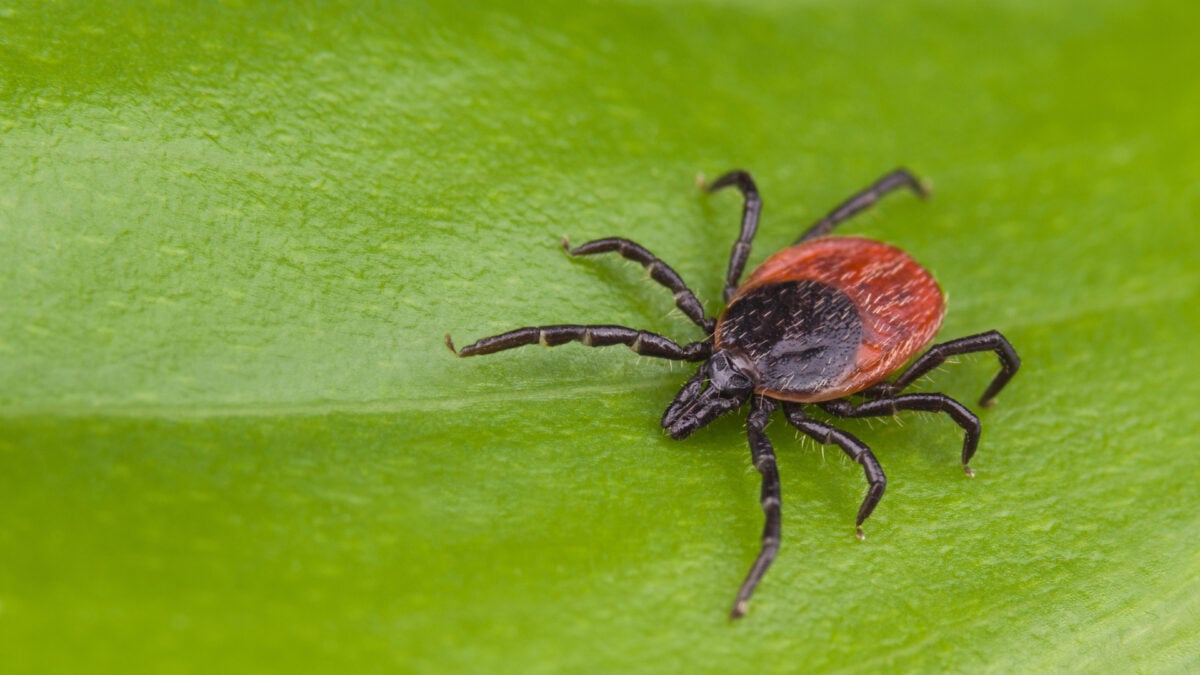
Here’s an important tip for international travelers coming back home: Be sure to check for any blood-sucking creepy-crawlies attached to you. In a study out today, health experts warn that exotic, potentially disease-carrying ticks are regularly entering the U.S. by hitching a ride onto returning Americans.
Tick scientists in Connecticut conducted the research, published Friday in the journal iScience. They detailed seven separate cases of nonnative ticks entering the state via travelers in recent years, some of which carried possible germs. These introductions are likely happening all across the country, not just Connecticut, and are a serious public health concern, the researchers say.
“Each one of these ticks could potentially pose substantial health risk to the travelers as well as to the country,” study author Goudarz Molaei, a scientist at the Connecticut Agricultural Experiment Station’s Center for Vector Biology & Zoonotic Diseases, told Gizmodo. “If any one of them ends up released into the environment unintentionally, there is a potential they could start establishing populations and expanding.”
As part of their job, Molaei and his colleagues help identify ticks brought to them by the public, particularly human-biting and disease-causing ticks. And while most of these cases are caused by native species, they’ve occasionally come across nonnative ticks, too. Ticks and the diseases they spread have become a growing issue in the U.S., thanks partly to a warmer climate. These same conditions might also make it easier for invasive species to gain a foothold here, so the researchers wanted to highlight some of the exotic cases they’ve documented over the years.
They describe seven nonnative tick introductions into Connecticut between 2019 and 2023. The ticks originated from Central America, Africa, and Europe. Two of the ticks, both members of the species Amblyomma mixtum, carried the bacteria Rickettsia amblyommatis.
R. amblyommatis is related to known tickborne germs, including those responsible for Rocky Mountain spotted fever, and it’s suspected to possibly cause disease in people as well. Outside of its human impact, A. mixtum ticks are dangerous to livestock, too, capable of causing massive infestations and spreading other diseases. Some of the other ticks they identified, such as Ixodes ricinus, also carry human diseases in their native environment, such as Lyme-causing bacteria.
And just this month, Molaei and his team helped out on a new case of a nonnative tick within the state. The person carrying the tick became sick, and their doctors were at first perplexed on how to even deal with the situation, according to Molaei. Fortunately, the team directed them to a lab that could perform the proper testing, and the patient ultimately recovered.
Molaei notes that since Connecticut isn’t a huge travel hub, it’s likely the risk of nonnative tick introductions is higher in other areas of the U.S. There are lots of places in the country where these and other exotic ticks could make a new home if given the opportunity, he added. Many states are also much less equipped to even detect these potential cases, according to Molaei, further raising the odds of new species and diseases sneakily establishing themselves in the U.S.
This isn’t a hypothetical risk either—it’s already happened. In 2017, researchers in New Jersey discovered the arrival of the Asian longhorned tick (Haemaphysalis longicornis) to the area. Despite efforts to curtail its presence, the tick has since spread to nearly half of the country and has become a serious threat to livestock (though they can carry and spread human diseases as well). It’s unknown how the Asian longhorned tick found its way here, though it may have ridden along with a human or animal traveler.
The researchers argue that more resources are needed to surveil and mitigate these invasive tick threats. These efforts should include increased monitoring of agricultural goods being brought into the U.S., along with improved education on identifying potentially exotic ticks. People in general should also be more aware of how to prevent and detect tick bites, especially when they’re traveling.
“Travelers should remain alert. And they have to realize that apart from themselves being at risk of contracting tick-borne diseases when they are traveling, there are the unintentional consequences of these things that are arriving here,” Molaei said. “A proper tick check is of importance, particularly before people get on a plane. And they have to carefully inspect their luggage and their clothing before they get on board.”
For their part, Molaei and his team will continue to keep a close eye out for ticks, both native and exotic, in their state.


 English
 Arabic
 French
 Spanish
 Deutsch
 Turkish
 Dutch
Dutch
 Italiano
 Russian
 Romaian
 Portuguese (Brazil)
 Greek
Greek