
• Toyota is doubling down on its controversial stance against fully electrifying the global car market. According to the company, producing and powering 9 million electric vehicles in regions reliant on fossil fuel-based electricity can result in the same emissions as 27 million hybrids. Their chairman argues that hybrids offer a more efficient path to reducing carbon emissions, especially where clean energy grids are not yet widespread.

    This claim adds fuel to the growing debate over the true environmental impact of EVs. While EVs may be cleaner during operation, Toyota insists that lifecycle emissions—including battery production and dirty grid charging—tell a more complex story. With global regulators pushing hard for EV-only futures, Toyota’s position remains both controversial and disruptive.

    #ToyotaEVs #HybridVsElectric #SustainableMobility #EVDebate #GreenTechnology
    Toyota is doubling down on its controversial stance against fully electrifying the global car market. According to the company, producing and powering 9 million electric vehicles in regions reliant on fossil fuel-based electricity can result in the same emissions as 27 million hybrids. Their chairman argues that hybrids offer a more efficient path to reducing carbon emissions, especially where clean energy grids are not yet widespread. This claim adds fuel to the growing debate over the true environmental impact of EVs. While EVs may be cleaner during operation, Toyota insists that lifecycle emissions—including battery production and dirty grid charging—tell a more complex story. With global regulators pushing hard for EV-only futures, Toyota’s position remains both controversial and disruptive. #ToyotaEVs #HybridVsElectric #SustainableMobility #EVDebate #GreenTechnology
    Like
    Love
    Wow
    3
    0 Comments 0 Shares 53K Views 0 Reviews
  • In a groundbreaking step toward sustainable transport, Norway has built the world’s first wireless charging road in Trondheim. Spanning just 100 meters, this smart stretch uses copper coils embedded beneath the asphalt to wirelessly charge electric buses in motion using inductive energy transfer. Developed by Electreon Wireless, the system is currently powering Yutong and Higer buses on active city routes—without needing to stop for charging.

    This pilot project is more than just a tech showcase. It's a real-world test of how wireless roads perform in extreme Nordic winters and whether they can eliminate charging downtime entirely. If successful, this technology could be scaled to highways and urban streets, tackling EV range anxiety and revolutionizing how cities approach electric infrastructure. Norway once again proves it's a global leader in clean transportation innovation.

    #EVCharging #WirelessCharging #NorwayInnovation #GreenTech #SustainableTransport
    In a groundbreaking step toward sustainable transport, Norway has built the world’s first wireless charging road in Trondheim. Spanning just 100 meters, this smart stretch uses copper coils embedded beneath the asphalt to wirelessly charge electric buses in motion using inductive energy transfer. Developed by Electreon Wireless, the system is currently powering Yutong and Higer buses on active city routes—without needing to stop for charging. This pilot project is more than just a tech showcase. It's a real-world test of how wireless roads perform in extreme Nordic winters and whether they can eliminate charging downtime entirely. If successful, this technology could be scaled to highways and urban streets, tackling EV range anxiety and revolutionizing how cities approach electric infrastructure. Norway once again proves it's a global leader in clean transportation innovation. #EVCharging #WirelessCharging #NorwayInnovation #GreenTech #SustainableTransport
    Like
    Love
    Wow
    3
    0 Comments 0 Shares 47K Views 0 Reviews
  • In a remarkable leap toward carbon neutrality, researchers from Tohoku University in Japan have unveiled a cutting-edge technology that can convert carbon dioxide (CO₂) into carbon monoxide (CO)—a key building block for synthetic fuels—in just 15 minutes. This new method uses a cost-effective pigment called cobalt phthalocyanine (CoPc), applied directly onto gas diffusion electrodes through a spray-based technique. This crystalline coating significantly improves electron transfer efficiency, making the process not only faster but also scalable for industrial applications.

    Previous methods took nearly 24 hours and involved complex chemical preparations, but this breakthrough achieves stable CO output for over 144 continuous hours, surpassing industrial benchmarks at current densities above 1000 mA/cm². The innovation is a milestone in Carbon Capture and Utilization (CCU), transforming a major greenhouse gas into a valuable fuel source. As the world races toward decarbonization, this fast, durable, and low-cost approach offers a game-changing tool in the fight against climate change.

    #CarbonCapture #CleanEnergy #CO2ToFuel #GreenTechnology #ClimateSolutions
    In a remarkable leap toward carbon neutrality, researchers from Tohoku University in Japan have unveiled a cutting-edge technology that can convert carbon dioxide (CO₂) into carbon monoxide (CO)—a key building block for synthetic fuels—in just 15 minutes. This new method uses a cost-effective pigment called cobalt phthalocyanine (CoPc), applied directly onto gas diffusion electrodes through a spray-based technique. This crystalline coating significantly improves electron transfer efficiency, making the process not only faster but also scalable for industrial applications. Previous methods took nearly 24 hours and involved complex chemical preparations, but this breakthrough achieves stable CO output for over 144 continuous hours, surpassing industrial benchmarks at current densities above 1000 mA/cm². The innovation is a milestone in Carbon Capture and Utilization (CCU), transforming a major greenhouse gas into a valuable fuel source. As the world races toward decarbonization, this fast, durable, and low-cost approach offers a game-changing tool in the fight against climate change. #CarbonCapture #CleanEnergy #CO2ToFuel #GreenTechnology #ClimateSolutions
    Like
    Love
    Wow
    3
    0 Comments 0 Shares 43K Views 0 Reviews
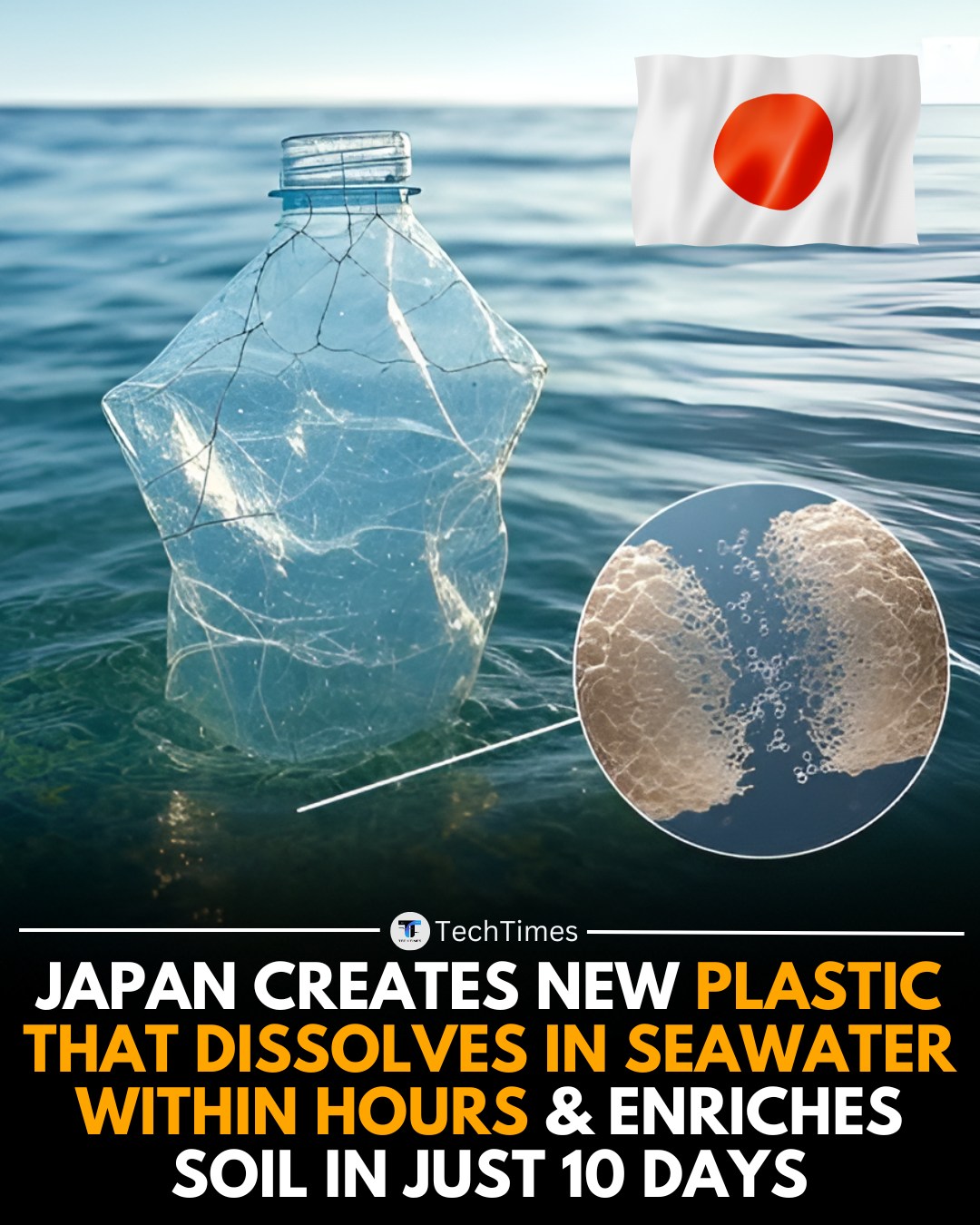
  • In a world-first innovation, scientists at RIKEN and the University of Tokyo have created a new type of plastic that completely dissolves in seawater within hours and fertilizes soil within 10 days.

    Led by Dr. Takashi Nishikawa, the team crafted the material using sodium hexametaphosphate and guanidinium-based monomers—ensuring it’s not only biodegradable, but also nutrient-rich, releasing phosphorus and nitrogen to enhance soil health.

    No microplastics
    Non-toxic to marine life
    91% recyclable
    Ideal for farming mulch, fishnets, and eco-packaging

    This is more than plastic — it’s a living material designed to vanish cleanly and give back to the planet.

    #JapanInnovation #BiodegradablePlastic #GreenTech #PlasticPollution #OceanSafe
    In a world-first innovation, scientists at RIKEN and the University of Tokyo have created a new type of plastic that completely dissolves in seawater within hours and fertilizes soil within 10 days. Led by Dr. Takashi Nishikawa, the team crafted the material using sodium hexametaphosphate and guanidinium-based monomers—ensuring it’s not only biodegradable, but also nutrient-rich, releasing phosphorus and nitrogen to enhance soil health. No microplastics Non-toxic to marine life 91% recyclable Ideal for farming mulch, fishnets, and eco-packaging This is more than plastic — it’s a living material designed to vanish cleanly and give back to the planet. #JapanInnovation #BiodegradablePlastic #GreenTech #PlasticPollution #OceanSafe
    Like
    Love
    Wow
    3
    0 Comments 0 Shares 43K Views 0 Reviews
  • Toyota Chairman Akio Toyoda has reignited the global debate on electric vehicles, claiming that EVs may actually increase emissions—especially in countries that rely on fossil fuels for electricity. According to Toyoda, producing and charging EVs on coal-heavy grids could make them "dirtier than hybrids", citing data that one electric car generates the same carbon footprint as three hybrid vehicles.

    Despite the controversy, Toyota isn’t exiting the EV race. The company is expanding its bZ electric lineup, enhancing Lexus EVs, and exploring hydrogen combustion tech with BMW. Yet, Toyoda insists hybrids and synthetic fuels offer a faster and more realistic path to decarbonization without risking economic fallout.

    With Toyota still leading the auto industry in global sales, the question looms:
    Are EVs the future—or just one part of it?

    #Toyota #HybridVsEV #EVDebate #AkioToyoda #GreenTech
    Toyota Chairman Akio Toyoda has reignited the global debate on electric vehicles, claiming that EVs may actually increase emissions—especially in countries that rely on fossil fuels for electricity. According to Toyoda, producing and charging EVs on coal-heavy grids could make them "dirtier than hybrids", citing data that one electric car generates the same carbon footprint as three hybrid vehicles. Despite the controversy, Toyota isn’t exiting the EV race. The company is expanding its bZ electric lineup, enhancing Lexus EVs, and exploring hydrogen combustion tech with BMW. Yet, Toyoda insists hybrids and synthetic fuels offer a faster and more realistic path to decarbonization without risking economic fallout. With Toyota still leading the auto industry in global sales, the question looms: Are EVs the future—or just one part of it? #Toyota #HybridVsEV #EVDebate #AkioToyoda #GreenTech
    Like
    Love
    Wow
    3
    0 Comments 0 Shares 43K Views 0 Reviews
  • In an ambitious leap toward eco-restoration, Japan has unveiled AI-powered drones capable of planting forests up to 10 times faster than traditional methods. These drones are equipped with LiDAR mapping, terrain analytics, and autonomous flight systems, allowing them to identify ideal planting spots and launch biodegradable seed pods with pinpoint precision. Each pod contains pre-selected native seeds, nutrients, and fungal spores to support early growth—even in harsh or degraded environments.

    Developed by Kyoto-based engineers, this swarm-based system is powered by solar-charged batteries and has shown an impressive 80% germination success rate in early trials. With each drone planting hundreds of pods per mission, entire football-field-sized plots can be reforested in under an hour. This innovation could be a game-changer for combatting deforestation, restoring biodiversity, and offsetting carbon emissions—proving once again that the fusion of AI and environmental science can rewrite the future of the planet.

    #ReforestationTech #AIDrones #EcoInnovation #GreenTechnology
    #SustainableForestry
    In an ambitious leap toward eco-restoration, Japan has unveiled AI-powered drones capable of planting forests up to 10 times faster than traditional methods. These drones are equipped with LiDAR mapping, terrain analytics, and autonomous flight systems, allowing them to identify ideal planting spots and launch biodegradable seed pods with pinpoint precision. Each pod contains pre-selected native seeds, nutrients, and fungal spores to support early growth—even in harsh or degraded environments. Developed by Kyoto-based engineers, this swarm-based system is powered by solar-charged batteries and has shown an impressive 80% germination success rate in early trials. With each drone planting hundreds of pods per mission, entire football-field-sized plots can be reforested in under an hour. This innovation could be a game-changer for combatting deforestation, restoring biodiversity, and offsetting carbon emissions—proving once again that the fusion of AI and environmental science can rewrite the future of the planet. #ReforestationTech #AIDrones #EcoInnovation #GreenTechnology #SustainableForestry
    0 Comments 0 Shares 38K Views 0 Reviews
  • Canadian scientists have engineered a revolutionary battery from tree-derived cellulose nanofibers—an energy storage solution that’s not only biodegradable but vanishes into the soil within 60 days after disposal. Unlike conventional lithium-ion batteries that contain toxic metals and pose fire risks, these wood-based batteries are entirely plant-based, flexible, and eco-friendly. They've already been tested in lightweight applications like drones, LED lights, and wearables, proving both functionality and sustainability.

    The innovation marks a major leap toward greener electronics. With the rise of IoT devices, wearables, and smart packaging, demand for disposable batteries is surging—and so is the resulting e-waste. These tree-powered batteries could eliminate that problem entirely. Imagine powering devices without leaving behind a single gram of waste. Canada is pioneering a future where energy isn’t just renewable—it’s compostable.

    #GreenTech #BiodegradableBattery #SustainableInnovation #EcoFriendlyTech #CanadianScience
    Canadian scientists have engineered a revolutionary battery from tree-derived cellulose nanofibers—an energy storage solution that’s not only biodegradable but vanishes into the soil within 60 days after disposal. Unlike conventional lithium-ion batteries that contain toxic metals and pose fire risks, these wood-based batteries are entirely plant-based, flexible, and eco-friendly. They've already been tested in lightweight applications like drones, LED lights, and wearables, proving both functionality and sustainability. The innovation marks a major leap toward greener electronics. With the rise of IoT devices, wearables, and smart packaging, demand for disposable batteries is surging—and so is the resulting e-waste. These tree-powered batteries could eliminate that problem entirely. Imagine powering devices without leaving behind a single gram of waste. Canada is pioneering a future where energy isn’t just renewable—it’s compostable. #GreenTech #BiodegradableBattery #SustainableInnovation #EcoFriendlyTech #CanadianScience
    0 Comments 0 Shares 33K Views 0 Reviews
  • Aircela, a New York-based startup, has unveiled a game-changing technology: a fridge-sized device that pulls CO₂ and water vapor from the air and turns them into engine-ready gasoline using renewable electricity. No drilling, pipelines, or refineries—just clean fuel made on-site, on demand.

    No infrastructure overhaul needed
    The synthetic fuel works seamlessly with current combustion engines, meaning cars, trucks, and even aircraft can use it without modification.

    Eco-friendly and decentralized
    Unlike traditional fossil fuels, this method is carbon-neutral, since it recycles atmospheric CO₂. It also avoids the emissions and inefficiencies of centralized fuel production and delivery.

    The company’s tech is designed for off-grid and commercial use—ideal for military bases, remote areas, or industries looking to cut carbon without losing power.

    Backed by big names like Maersk Growth and Ripple’s Chris Larsen, Aircela plans to roll out its first commercial machines in fall 2025.

    If scaled successfully, this could rewrite the rules of global energy—replacing oil tankers with compact boxes that make fuel from thin air.

    #CleanFuel #Aircela #CarbonNeutral #GreenTech #EnergyInnovation
    Aircela, a New York-based startup, has unveiled a game-changing technology: a fridge-sized device that pulls CO₂ and water vapor from the air and turns them into engine-ready gasoline using renewable electricity. No drilling, pipelines, or refineries—just clean fuel made on-site, on demand. No infrastructure overhaul needed The synthetic fuel works seamlessly with current combustion engines, meaning cars, trucks, and even aircraft can use it without modification. Eco-friendly and decentralized Unlike traditional fossil fuels, this method is carbon-neutral, since it recycles atmospheric CO₂. It also avoids the emissions and inefficiencies of centralized fuel production and delivery. The company’s tech is designed for off-grid and commercial use—ideal for military bases, remote areas, or industries looking to cut carbon without losing power. Backed by big names like Maersk Growth and Ripple’s Chris Larsen, Aircela plans to roll out its first commercial machines in fall 2025. If scaled successfully, this could rewrite the rules of global energy—replacing oil tankers with compact boxes that make fuel from thin air. #CleanFuel #Aircela #CarbonNeutral #GreenTech #EnergyInnovation
    0 Comments 0 Shares 32K Views 0 Reviews
  • Engineered from natural timber, this "superwood" isn't just hype—it’s a sustainable breakthrough. Developed by researchers at the University of Maryland and commercialized by InventWood, this material boasts a tensile strength 50 times greater than steel while remaining incredibly lightweight.

    What makes it revolutionary? The process strips away lignin (the stiffening compound in wood) and compresses the fibers into a dense structure, enhancing durability while reducing environmental impact. It’s also carbon negative, fire- and rot-resistant, and even stands up to ballistic impact—ideal for everything from construction to armor panels.

    Production kicks off this year in Maryland with a capacity of 1 million square feet, expanding to 30 million soon after. As the world shifts toward greener materials, superwood may redefine how we build cities, vehicles, and even consumer products.

    #Superwood #GreenTech #SustainableInnovation #MaterialsScience #FutureOfConstruction
    Engineered from natural timber, this "superwood" isn't just hype—it’s a sustainable breakthrough. Developed by researchers at the University of Maryland and commercialized by InventWood, this material boasts a tensile strength 50 times greater than steel while remaining incredibly lightweight. What makes it revolutionary? The process strips away lignin (the stiffening compound in wood) and compresses the fibers into a dense structure, enhancing durability while reducing environmental impact. It’s also carbon negative, fire- and rot-resistant, and even stands up to ballistic impact—ideal for everything from construction to armor panels. Production kicks off this year in Maryland with a capacity of 1 million square feet, expanding to 30 million soon after. As the world shifts toward greener materials, superwood may redefine how we build cities, vehicles, and even consumer products. #Superwood #GreenTech #SustainableInnovation #MaterialsScience #FutureOfConstruction
    0 Comments 0 Shares 29K Views 0 Reviews
  • In the face of rising deforestation and climate threats, Japan is deploying cutting-edge autonomous drones to replant forests faster, smarter, and more sustainably than ever before. Equipped with AI, LiDAR, and precision-mapping software, these drones scan the terrain, identify optimal planting spots, and drop biodegradable seed pods—each containing native seeds, nutrients, and fungi to kickstart an entire ecosystem.

    Each drone can cover a football field in under an hour and operates in coordinated swarms powered by solar-charging stations. In early tests across the wildfire-ravaged Kumamoto region, they achieved an 80% germination success rate—transforming barren landscapes into thriving, biodiverse environments.

    This isn’t just about trees. It’s about restoring life, capturing carbon, and proving how technology can work hand-in-hand with nature.

    #Reforestation #JapanTech #AIForGood #EcoInnovation #SustainableFuture #DronesForForests #GreenTechnology
    In the face of rising deforestation and climate threats, Japan is deploying cutting-edge autonomous drones to replant forests faster, smarter, and more sustainably than ever before. Equipped with AI, LiDAR, and precision-mapping software, these drones scan the terrain, identify optimal planting spots, and drop biodegradable seed pods—each containing native seeds, nutrients, and fungi to kickstart an entire ecosystem. Each drone can cover a football field in under an hour and operates in coordinated swarms powered by solar-charging stations. In early tests across the wildfire-ravaged Kumamoto region, they achieved an 80% germination success rate—transforming barren landscapes into thriving, biodiverse environments. This isn’t just about trees. It’s about restoring life, capturing carbon, and proving how technology can work hand-in-hand with nature. #Reforestation #JapanTech #AIForGood #EcoInnovation #SustainableFuture #DronesForForests #GreenTechnology
    0 Comments 0 Shares 33K Views 0 Reviews
  • A hydrogen combustion engine with zero CO₂ emissions and diesel-like performance is now a reality!
    JCB’s groundbreaking engine has just been approved for commercial use—marking a massive leap toward cleaner construction and heavy-duty equipment.

    This isn’t the future. It’s happening now.
    Read more about this achievement:


    #JCB #HydrogenEngine #CleanEnergy #GreenTech #Innovation #SustainableMachinery #Engineerine #MechanicalEducation
    A hydrogen combustion engine with zero CO₂ emissions and diesel-like performance is now a reality! JCB’s groundbreaking engine has just been approved for commercial use—marking a massive leap toward cleaner construction and heavy-duty equipment. This isn’t the future. It’s happening now. Read more about this achievement: #JCB #HydrogenEngine #CleanEnergy #GreenTech #Innovation #SustainableMachinery #Engineerine #MechanicalEducation
    0 Comments 0 Shares 23K Views 0 Reviews
  • Japan Invents Plastic That Melts Away in the Ocean — and Heals the Earth!
    This revolutionary material dissolves in seawater within hours — leaving behind no toxic waste and even enriching the soil it touches.

    It could mark the beginning of the end for plastic pollution — and the dawn of eco-conscious packaging that gives back to the planet.
    See how it works:

    #EcoInnovation #PlasticPollution #GreenTechnology #CleanOceans #JapanTech #SustainableFuture
    Japan Invents Plastic That Melts Away in the Ocean — and Heals the Earth! This revolutionary material dissolves in seawater within hours — leaving behind no toxic waste and even enriching the soil it touches. It could mark the beginning of the end for plastic pollution — and the dawn of eco-conscious packaging that gives back to the planet. See how it works: #EcoInnovation #PlasticPollution #GreenTechnology #CleanOceans #JapanTech #SustainableFuture
    0 Comments 0 Shares 31K Views 0 Reviews
More Results