• Linux is the only real alternative to Windows/macOS — now it needs to be more accessible
    Linux is the only real alternative to Windows/macOS — now it needs to be more accessible
    Like
    Love
    Wow
    3
    0 Comentários 0 Compartilhamentos 98KB Visualizações 0 Anterior
  • Flywheel Energy Storage Market Performance: Key Metrics and Growth Analysis 2032

    The Flywheel Energy Storage Market is gaining increasing attention as energy systems worldwide seek fast-response, durable, and environmentally friendly storage technologies. Flywheel energy storage systems (FESS) store kinetic energy through a rotating mass and release it instantly when required, making them ideal for applications requiring high power density and rapid charge-discharge cycles. Valued at US$ 469.44 million in 2024, the market is expected to expand at a CAGR of 5.50% from 2025 to 2032, supported by growing investments in grid stability, renewable integration, and critical power infrastructure.
    Market Overview and Growth Fundamentals
    Flywheel energy storage systems offer a unique alternative to conventional battery-based storage by providing long operational lifetimes, minimal maintenance, and high round-trip efficiency. Unlike chemical batteries, flywheels experience negligible performance degradation over repeated cycles, making them particularly suitable for applications demanding frequent energy discharge.
    Market growth is driven by increasing grid instability caused by renewable energy intermittency, rising demand for uninterruptible power supply (UPS) systems, and the need for fast frequency regulation. Governments and utilities are increasingly adopting advanced storage technologies to improve power quality and reduce dependency on fossil-fuel-based peaking plants.
    Technology Segmentation Analysis
    By technology, the market is segmented into mechanical flywheel systems and magnetic bearing flywheel systems. Mechanical flywheel systems rely on traditional bearings and are widely used in cost-sensitive applications where moderate performance is acceptable. These systems offer robustness and simpler design, making them suitable for industrial and localized energy storage needs.
    Magnetic bearing flywheel systems represent a more advanced segment, utilizing magnetic levitation to minimize friction and energy loss. These systems enable higher rotational speeds, improved efficiency, and longer operational life. As demand for high-performance energy storage grows, magnetic bearing flywheel systems are expected to witness faster adoption across grid-scale and mission-critical applications.
    Application-Based Market Insights
    The flywheel energy storage market serves diverse applications including frequency regulation, uninterruptible power supply (UPS), renewable energy integration, transportation, and distributed energy systems. Frequency regulation remains one of the most prominent applications, as flywheels can respond within milliseconds to grid fluctuations, helping maintain system stability.
    In UPS applications, flywheel systems are increasingly replacing traditional battery backups in data centers, hospitals, and industrial facilities due to their reliability and low maintenance requirements. Additionally, flywheels are being explored for regenerative braking and energy recovery in rail and transit systems, contributing to overall energy efficiency.
    End-User Perspective
    Based on end-user, the market is segmented into utilities, industrial facilities, data centers, transportation systems, and commercial infrastructure. Utilities represent a major end-user group, leveraging flywheel systems to enhance grid resilience and manage peak load variations.
    Data centers and industrial facilities are rapidly adopting flywheel energy storage as part of their power continuity strategies. The ability of flywheels to provide instantaneous backup power without chemical degradation makes them highly attractive for mission-critical operations where downtime is unacceptable.
    Regional Market Trends
    Regionally, North America holds a leading share in the flywheel energy storage market due to early technology adoption, strong presence of key market players, and significant investments in grid modernization. The region’s focus on renewable integration and power quality management further supports market growth.
    Europe follows closely, driven by aggressive decarbonization goals, smart grid initiatives, and increased adoption of sustainable energy storage solutions. Countries such as Germany and the UK are actively deploying flywheel systems for grid support and industrial applications.
    The Asia-Pacific region is expected to witness the fastest growth during the forecast period, supported by rapid urbanization, expanding renewable energy capacity, and increasing demand for reliable power infrastructure. Emerging economies are showing growing interest in flywheel technology as part of broader energy storage diversification strategies.
    Competitive Landscape and Key Players
    The global flywheel energy storage market is moderately consolidated, with companies focusing on technological innovation, system efficiency, and application-specific solutions. Key players include Amber Kinetics, Inc., Flywheel Energy Systems, Inc., Beacon Power, LLC, STORNETIC GmbH, VYCON, Inc., PowerThru, Inc., and Calnetix Technologies, LLC.
    These companies are investing in advanced materials, high-speed rotor designs, and improved control systems to enhance performance and reduce system costs. Strategic partnerships with utilities and industrial customers are also shaping competitive dynamics within the market.
    Future Outlook and Strategic Opportunities
    The outlook for the flywheel energy storage market remains positive as energy systems transition toward decentralization and sustainability. Growing emphasis on fast-response storage, reduced environmental impact, and long service life positions flywheel technology as a complementary solution alongside batteries and other storage systems.
    Opportunities are expected to emerge in hybrid energy storage configurations, smart grids, and transportation electrification projects. As awareness of lifecycle cost advantages increases, flywheel energy storage is likely to gain broader acceptance across multiple end-use sectors.
    For a deeper understanding of market segmentation, regional analysis, and competitive strategies, stakeholders can explore a detailed Flywheel Energy Storage Market sample to support data-driven decision-making.
    Browse more Report:
    Ablation Antenna Unit Market
    Zero Liquid Discharge Systems Market
    Contrast Media Market
    Refurbished Medical Imaging Devices Market
    Capsule Endoscopy Market

    Flywheel Energy Storage Market Performance: Key Metrics and Growth Analysis 2032 The Flywheel Energy Storage Market is gaining increasing attention as energy systems worldwide seek fast-response, durable, and environmentally friendly storage technologies. Flywheel energy storage systems (FESS) store kinetic energy through a rotating mass and release it instantly when required, making them ideal for applications requiring high power density and rapid charge-discharge cycles. Valued at US$ 469.44 million in 2024, the market is expected to expand at a CAGR of 5.50% from 2025 to 2032, supported by growing investments in grid stability, renewable integration, and critical power infrastructure. Market Overview and Growth Fundamentals Flywheel energy storage systems offer a unique alternative to conventional battery-based storage by providing long operational lifetimes, minimal maintenance, and high round-trip efficiency. Unlike chemical batteries, flywheels experience negligible performance degradation over repeated cycles, making them particularly suitable for applications demanding frequent energy discharge. Market growth is driven by increasing grid instability caused by renewable energy intermittency, rising demand for uninterruptible power supply (UPS) systems, and the need for fast frequency regulation. Governments and utilities are increasingly adopting advanced storage technologies to improve power quality and reduce dependency on fossil-fuel-based peaking plants. Technology Segmentation Analysis By technology, the market is segmented into mechanical flywheel systems and magnetic bearing flywheel systems. Mechanical flywheel systems rely on traditional bearings and are widely used in cost-sensitive applications where moderate performance is acceptable. These systems offer robustness and simpler design, making them suitable for industrial and localized energy storage needs. Magnetic bearing flywheel systems represent a more advanced segment, utilizing magnetic levitation to minimize friction and energy loss. These systems enable higher rotational speeds, improved efficiency, and longer operational life. As demand for high-performance energy storage grows, magnetic bearing flywheel systems are expected to witness faster adoption across grid-scale and mission-critical applications. Application-Based Market Insights The flywheel energy storage market serves diverse applications including frequency regulation, uninterruptible power supply (UPS), renewable energy integration, transportation, and distributed energy systems. Frequency regulation remains one of the most prominent applications, as flywheels can respond within milliseconds to grid fluctuations, helping maintain system stability. In UPS applications, flywheel systems are increasingly replacing traditional battery backups in data centers, hospitals, and industrial facilities due to their reliability and low maintenance requirements. Additionally, flywheels are being explored for regenerative braking and energy recovery in rail and transit systems, contributing to overall energy efficiency. End-User Perspective Based on end-user, the market is segmented into utilities, industrial facilities, data centers, transportation systems, and commercial infrastructure. Utilities represent a major end-user group, leveraging flywheel systems to enhance grid resilience and manage peak load variations. Data centers and industrial facilities are rapidly adopting flywheel energy storage as part of their power continuity strategies. The ability of flywheels to provide instantaneous backup power without chemical degradation makes them highly attractive for mission-critical operations where downtime is unacceptable. Regional Market Trends Regionally, North America holds a leading share in the flywheel energy storage market due to early technology adoption, strong presence of key market players, and significant investments in grid modernization. The region’s focus on renewable integration and power quality management further supports market growth. Europe follows closely, driven by aggressive decarbonization goals, smart grid initiatives, and increased adoption of sustainable energy storage solutions. Countries such as Germany and the UK are actively deploying flywheel systems for grid support and industrial applications. The Asia-Pacific region is expected to witness the fastest growth during the forecast period, supported by rapid urbanization, expanding renewable energy capacity, and increasing demand for reliable power infrastructure. Emerging economies are showing growing interest in flywheel technology as part of broader energy storage diversification strategies. Competitive Landscape and Key Players The global flywheel energy storage market is moderately consolidated, with companies focusing on technological innovation, system efficiency, and application-specific solutions. Key players include Amber Kinetics, Inc., Flywheel Energy Systems, Inc., Beacon Power, LLC, STORNETIC GmbH, VYCON, Inc., PowerThru, Inc., and Calnetix Technologies, LLC. These companies are investing in advanced materials, high-speed rotor designs, and improved control systems to enhance performance and reduce system costs. Strategic partnerships with utilities and industrial customers are also shaping competitive dynamics within the market. Future Outlook and Strategic Opportunities The outlook for the flywheel energy storage market remains positive as energy systems transition toward decentralization and sustainability. Growing emphasis on fast-response storage, reduced environmental impact, and long service life positions flywheel technology as a complementary solution alongside batteries and other storage systems. Opportunities are expected to emerge in hybrid energy storage configurations, smart grids, and transportation electrification projects. As awareness of lifecycle cost advantages increases, flywheel energy storage is likely to gain broader acceptance across multiple end-use sectors. For a deeper understanding of market segmentation, regional analysis, and competitive strategies, stakeholders can explore a detailed Flywheel Energy Storage Market sample to support data-driven decision-making. Browse more Report: Ablation Antenna Unit Market Zero Liquid Discharge Systems Market Contrast Media Market Refurbished Medical Imaging Devices Market Capsule Endoscopy Market
    0 Comentários 0 Compartilhamentos 5KB Visualizações 0 Anterior
  • Global High-Strength Polyester Thread Market Statistics and Revenue Forecast 2032
    The High-Strength Polyester Thread Market is gaining steady momentum as industries increasingly demand durable, lightweight, and cost-effective materials for high-performance applications. High-strength polyester threads are widely valued for their excellent tensile strength, abrasion resistance, dimensional stability, and chemical durability, making them suitable for both industrial and advanced textile uses. In 2024, the market was valued at US$ 14,509.54 million and is projected to expand at a CAGR of 5.95% from 2025 to 2032, reflecting consistent demand across global end-use sectors.
    Market Overview and Growth Drivers
    High-strength polyester thread is manufactured using advanced polymer processing techniques to deliver enhanced strength and long-term performance under stress. These threads offer a favorable balance between strength, flexibility, and resistance to environmental factors such as moisture, UV exposure, and chemicals. As a result, they are increasingly replacing traditional materials in applications where reliability and longevity are critical.
    Market growth is primarily driven by rising demand from the automotive, packaging, apparel, construction, and industrial manufacturing sectors. The expansion of technical textiles, growth in infrastructure projects, and increasing use of reinforced materials in consumer goods are further accelerating adoption. Additionally, cost efficiency compared to alternative high-performance fibers supports widespread usage in price-sensitive markets.
    Segmentation by Type
    By type, the market is segmented into textured and twisted high-strength polyester threads. Twisted threads hold a significant share due to their superior tensile strength, uniform structure, and suitability for heavy-duty applications. They are commonly used in industrial sewing, safety equipment, and automotive interiors where consistent performance is essential.
    Textured polyester threads are gaining traction in applications requiring improved bulk, elasticity, and surface softness. These threads are increasingly used in apparel, upholstery, and decorative textiles, where comfort and appearance must be balanced with durability. Growing innovation in texturing techniques is expected to further enhance their market potential.
    Coating-Based Market Analysis
    Based on coating, high-strength polyester threads may be categorized into coated and uncoated variants, depending on application requirements. Coated threads are widely adopted in environments exposed to moisture, chemicals, or friction, as coatings enhance resistance and extend service life. Industries such as marine textiles, outdoor equipment, and industrial packaging rely heavily on coated polyester threads.
    Uncoated threads, on the other hand, are preferred in applications where breathability, flexibility, or cost considerations are prioritized. The ability to tailor coatings for specific end uses provides manufacturers with opportunities to differentiate products and address niche market needs.
    Application Landscape
    The application segment includes apparel, automotive, packaging, industrial sewing, home textiles, and technical textiles. The apparel industry remains a major consumer, driven by rising global textile production and increasing demand for durable stitching in activewear, denim, and workwear.
    In the automotive sector, high-strength polyester threads are used in seat covers, airbags, safety belts, and interior trims due to their reliability and resistance to wear. Packaging applications, particularly in flexible packaging and strapping, are also contributing to market growth as industries seek strong yet lightweight materials. The expanding technical textiles segment represents a key opportunity, supported by advancements in industrial fabrics and reinforced materials.
    Regional Market Trends
    Regionally, Asia-Pacific dominates the high-strength polyester thread market, supported by large-scale textile manufacturing, favorable labor costs, and strong industrial output in countries such as China and India. The region benefits from an integrated supply chain, from raw material production to finished goods manufacturing.
    North America and Europe represent mature markets characterized by demand for high-quality and specialty threads used in automotive, industrial, and technical applications. Stringent quality standards and increasing focus on sustainable materials are influencing product innovation in these regions. Meanwhile, Latin America and the Middle East & Africa are experiencing gradual growth due to expanding manufacturing activity and infrastructure development.
    Competitive Landscape and Key Players
    The global market features a mix of multinational corporations and regional manufacturers competing on quality, innovation, and production scale. Key players include DuPont, Toray Industries, Inc., Mitsubishi Polyester Film, Inc., Uflex Limited, Ester Industries Limited, Jindal Poly Films Limited, and Polypack, Inc.
    These companies focus on capacity expansion, material innovation, and strategic collaborations to strengthen their market position. Investments in advanced manufacturing technologies and sustainable polyester solutions are increasingly shaping competitive strategies, as customers demand both performance and environmental responsibility.
    Market Outlook and Future Opportunities
    Looking ahead, the high-strength polyester thread market is expected to benefit from continued growth in technical textiles, automotive production, and industrial manufacturing. Innovations in polymer chemistry, recycling technologies, and coating formulations will further enhance product performance and sustainability. The shift toward lightweight, durable, and recyclable materials is likely to create new growth avenues over the forecast period.
    For stakeholders seeking detailed insights into segmentation, regional trends, and competitive positioning, accessing a comprehensive High-Strength Polyester Thread Market sample can support informed strategic planning and investment decisions.
    Browse more Report:
    Covered Stent Market
    Medical Elastomer Market
    Bioresorbable Vascular Scaffold Market
    Corneal Topographers Market
    Affinity Ligands Market

    Global High-Strength Polyester Thread Market Statistics and Revenue Forecast 2032 The High-Strength Polyester Thread Market is gaining steady momentum as industries increasingly demand durable, lightweight, and cost-effective materials for high-performance applications. High-strength polyester threads are widely valued for their excellent tensile strength, abrasion resistance, dimensional stability, and chemical durability, making them suitable for both industrial and advanced textile uses. In 2024, the market was valued at US$ 14,509.54 million and is projected to expand at a CAGR of 5.95% from 2025 to 2032, reflecting consistent demand across global end-use sectors. Market Overview and Growth Drivers High-strength polyester thread is manufactured using advanced polymer processing techniques to deliver enhanced strength and long-term performance under stress. These threads offer a favorable balance between strength, flexibility, and resistance to environmental factors such as moisture, UV exposure, and chemicals. As a result, they are increasingly replacing traditional materials in applications where reliability and longevity are critical. Market growth is primarily driven by rising demand from the automotive, packaging, apparel, construction, and industrial manufacturing sectors. The expansion of technical textiles, growth in infrastructure projects, and increasing use of reinforced materials in consumer goods are further accelerating adoption. Additionally, cost efficiency compared to alternative high-performance fibers supports widespread usage in price-sensitive markets. Segmentation by Type By type, the market is segmented into textured and twisted high-strength polyester threads. Twisted threads hold a significant share due to their superior tensile strength, uniform structure, and suitability for heavy-duty applications. They are commonly used in industrial sewing, safety equipment, and automotive interiors where consistent performance is essential. Textured polyester threads are gaining traction in applications requiring improved bulk, elasticity, and surface softness. These threads are increasingly used in apparel, upholstery, and decorative textiles, where comfort and appearance must be balanced with durability. Growing innovation in texturing techniques is expected to further enhance their market potential. Coating-Based Market Analysis Based on coating, high-strength polyester threads may be categorized into coated and uncoated variants, depending on application requirements. Coated threads are widely adopted in environments exposed to moisture, chemicals, or friction, as coatings enhance resistance and extend service life. Industries such as marine textiles, outdoor equipment, and industrial packaging rely heavily on coated polyester threads. Uncoated threads, on the other hand, are preferred in applications where breathability, flexibility, or cost considerations are prioritized. The ability to tailor coatings for specific end uses provides manufacturers with opportunities to differentiate products and address niche market needs. Application Landscape The application segment includes apparel, automotive, packaging, industrial sewing, home textiles, and technical textiles. The apparel industry remains a major consumer, driven by rising global textile production and increasing demand for durable stitching in activewear, denim, and workwear. In the automotive sector, high-strength polyester threads are used in seat covers, airbags, safety belts, and interior trims due to their reliability and resistance to wear. Packaging applications, particularly in flexible packaging and strapping, are also contributing to market growth as industries seek strong yet lightweight materials. The expanding technical textiles segment represents a key opportunity, supported by advancements in industrial fabrics and reinforced materials. Regional Market Trends Regionally, Asia-Pacific dominates the high-strength polyester thread market, supported by large-scale textile manufacturing, favorable labor costs, and strong industrial output in countries such as China and India. The region benefits from an integrated supply chain, from raw material production to finished goods manufacturing. North America and Europe represent mature markets characterized by demand for high-quality and specialty threads used in automotive, industrial, and technical applications. Stringent quality standards and increasing focus on sustainable materials are influencing product innovation in these regions. Meanwhile, Latin America and the Middle East & Africa are experiencing gradual growth due to expanding manufacturing activity and infrastructure development. Competitive Landscape and Key Players The global market features a mix of multinational corporations and regional manufacturers competing on quality, innovation, and production scale. Key players include DuPont, Toray Industries, Inc., Mitsubishi Polyester Film, Inc., Uflex Limited, Ester Industries Limited, Jindal Poly Films Limited, and Polypack, Inc. These companies focus on capacity expansion, material innovation, and strategic collaborations to strengthen their market position. Investments in advanced manufacturing technologies and sustainable polyester solutions are increasingly shaping competitive strategies, as customers demand both performance and environmental responsibility. Market Outlook and Future Opportunities Looking ahead, the high-strength polyester thread market is expected to benefit from continued growth in technical textiles, automotive production, and industrial manufacturing. Innovations in polymer chemistry, recycling technologies, and coating formulations will further enhance product performance and sustainability. The shift toward lightweight, durable, and recyclable materials is likely to create new growth avenues over the forecast period. For stakeholders seeking detailed insights into segmentation, regional trends, and competitive positioning, accessing a comprehensive High-Strength Polyester Thread Market sample can support informed strategic planning and investment decisions. Browse more Report: Covered Stent Market Medical Elastomer Market Bioresorbable Vascular Scaffold Market Corneal Topographers Market Affinity Ligands Market

    0 Comentários 0 Compartilhamentos 5KB Visualizações 0 Anterior
  • I was looking for WD-40 alternative
    I was looking for WD-40 alternative
    Like
    Love
    Wow
    3
    0 Comentários 0 Compartilhamentos 107KB Visualizações 0 Anterior
  • Alternative medicine??
    Alternative medicine??
    Like
    Love
    Wow
    3
    0 Comentários 0 Compartilhamentos 98KB Visualizações 0 Anterior
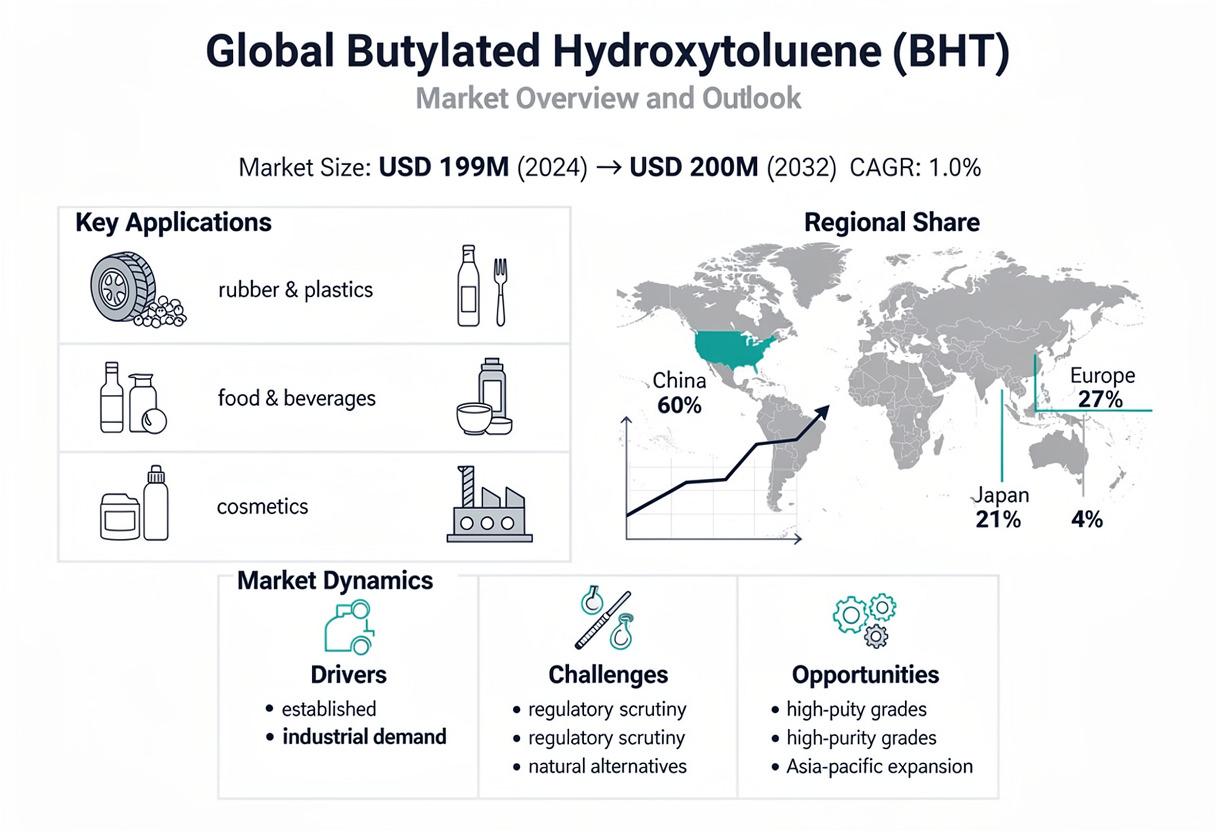
  • Global Butylated Hydroxytoluene (BHT) Market (2025–2032) | CAGR: 1.0%

    global Butylated Hydroxytoluene (BHT) market shows steady, mature growth, driven by its essential role as an antioxidant in rubber, plastics, food, and industrial applications. Despite regulatory scrutiny and rising competition from natural alternatives, stable demand from high-volume downstream industries and strong production bases in Asia-Pacific—particularly China—continue to support market resilience through 2032.
    Global Butylated Hydroxytoluene (BHT) Market (2025–2032) | CAGR: 1.0% global Butylated Hydroxytoluene (BHT) market shows steady, mature growth, driven by its essential role as an antioxidant in rubber, plastics, food, and industrial applications. Despite regulatory scrutiny and rising competition from natural alternatives, stable demand from high-volume downstream industries and strong production bases in Asia-Pacific—particularly China—continue to support market resilience through 2032.
    0 Comentários 0 Compartilhamentos 2KB Visualizações 0 Anterior
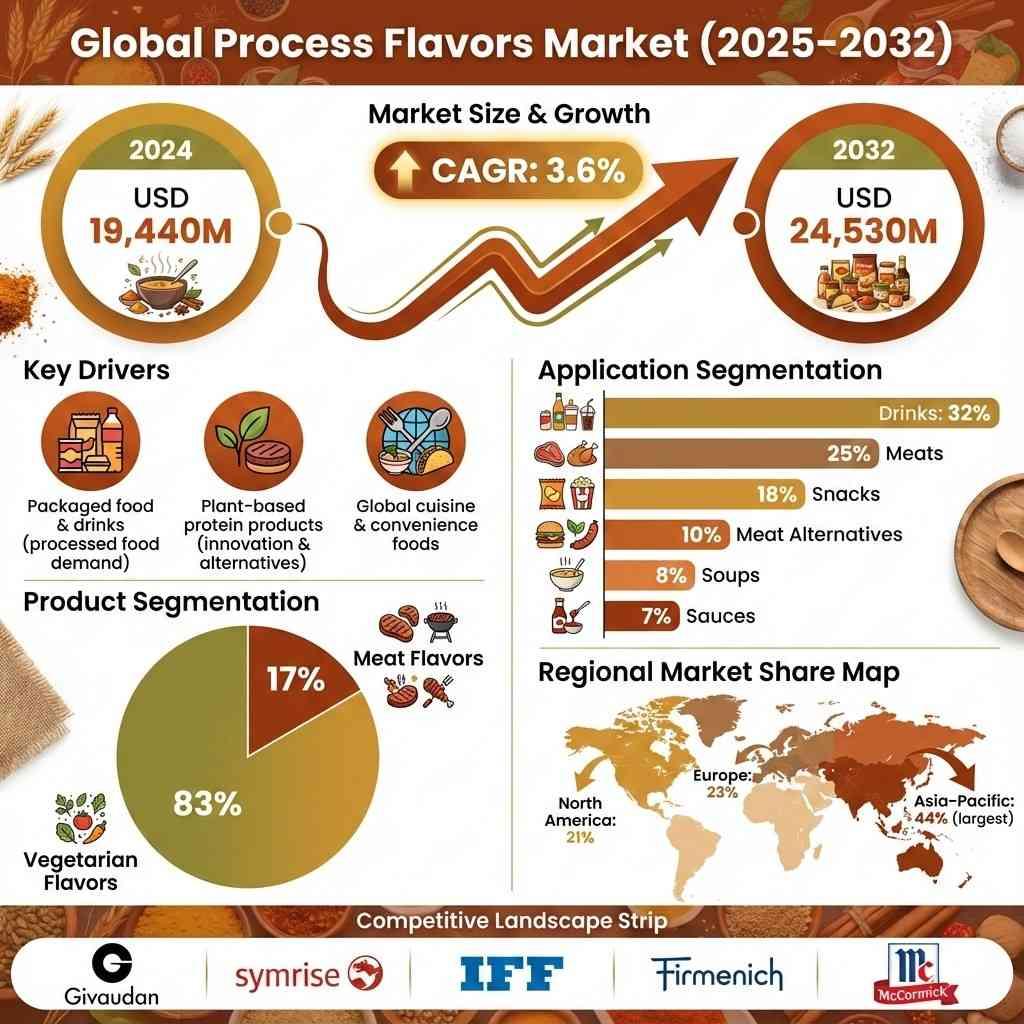
  • Global Process Flavors Market (2025–2032): Projected to Grow at 3.6% CAGR Driven by Processed Foods and Plant-Based Innovations
    global Process Flavors market was valued at USD 19,440 million in 2024 and is expected to reach USD 24,530 million by 2032, growing at a CAGR of 3.6%. Growth is driven by increasing demand for processed and convenience foods, rising consumer expectations for authentic flavors, and innovation in plant-based and alternative protein products, with Asia-Pacific leading the market at 44% share.
    Global Process Flavors Market (2025–2032): Projected to Grow at 3.6% CAGR Driven by Processed Foods and Plant-Based Innovations global Process Flavors market was valued at USD 19,440 million in 2024 and is expected to reach USD 24,530 million by 2032, growing at a CAGR of 3.6%. Growth is driven by increasing demand for processed and convenience foods, rising consumer expectations for authentic flavors, and innovation in plant-based and alternative protein products, with Asia-Pacific leading the market at 44% share.
    0 Comentários 0 Compartilhamentos 1KB Visualizações 0 Anterior
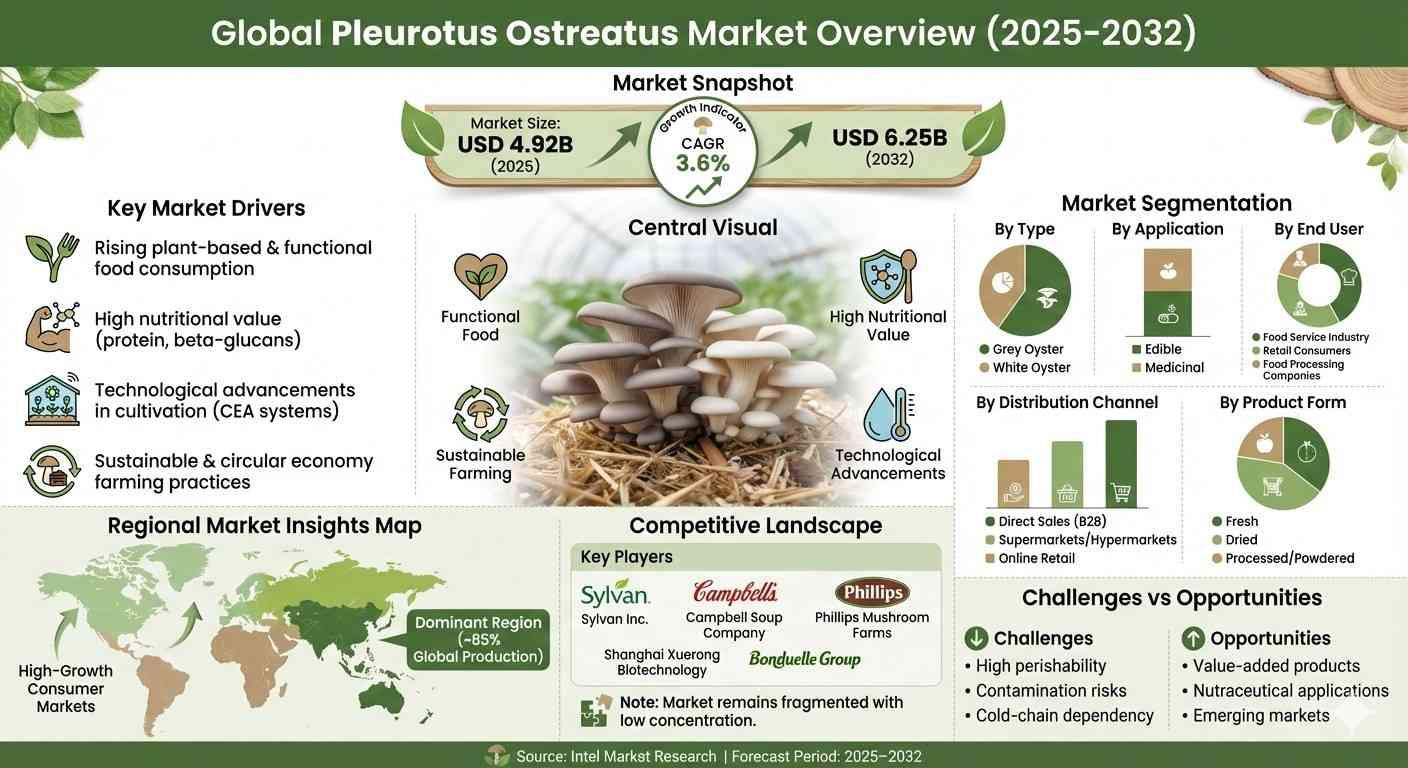
  • Global Pleurotus Ostreatus Market Size, Trends & Forecast (2025–2032) | CAGR 3.6%

    global Pleurotus Ostreatus market was valued at USD 4.92 billion in 2025 and is projected to reach USD 6.25 billion by 2032, growing at a steady CAGR of 3.6% during the forecast period. Market growth is primarily driven by rising global demand for alternative protein sources, increasing consumer awareness of nutritional and medicinal benefits, and technological advancements in mushroom cultivation practices. The expanding adoption of plant-based and functional foods, coupled with sustainable cultivation using agricultural waste substrates, is further strengthening market expansion across both developed and emerging regions.
    Global Pleurotus Ostreatus Market Size, Trends & Forecast (2025–2032) | CAGR 3.6% global Pleurotus Ostreatus market was valued at USD 4.92 billion in 2025 and is projected to reach USD 6.25 billion by 2032, growing at a steady CAGR of 3.6% during the forecast period. Market growth is primarily driven by rising global demand for alternative protein sources, increasing consumer awareness of nutritional and medicinal benefits, and technological advancements in mushroom cultivation practices. The expanding adoption of plant-based and functional foods, coupled with sustainable cultivation using agricultural waste substrates, is further strengthening market expansion across both developed and emerging regions.
    0 Comentários 0 Compartilhamentos 1KB Visualizações 0 Anterior
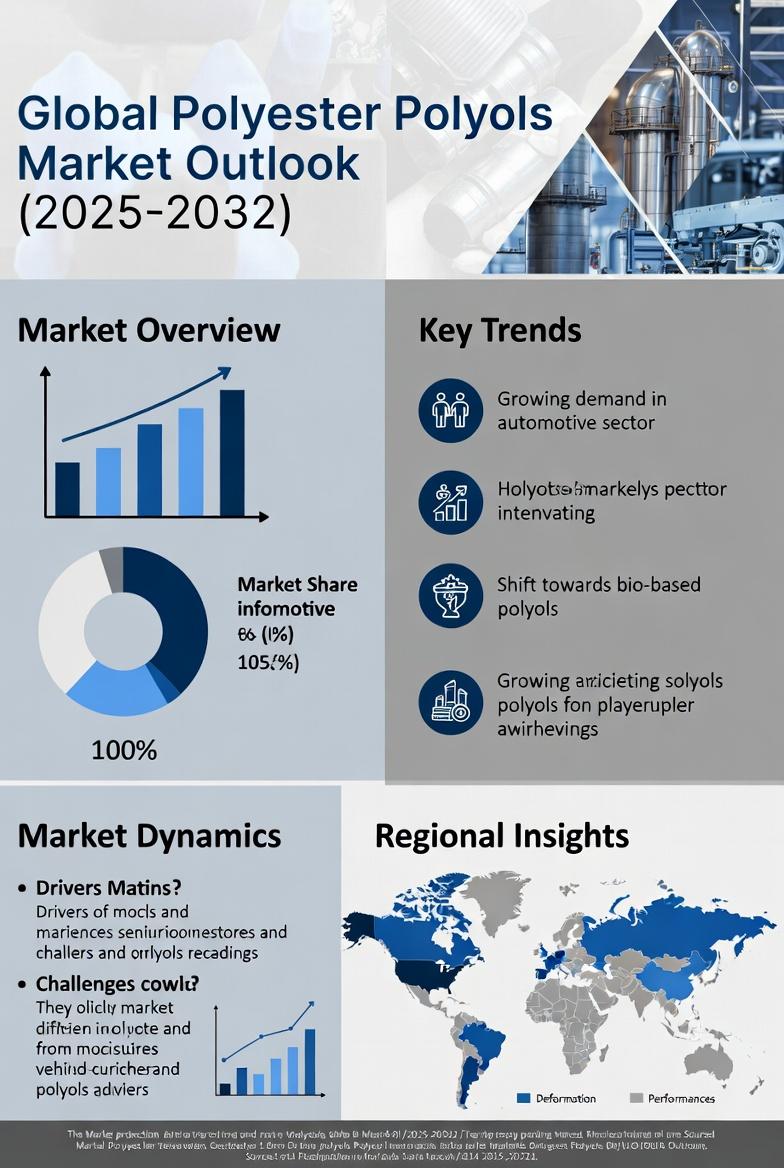
  • Global Polyester Polyols Market Size, Share, Demand Trends & Forecast (2025–2032) | CAGR -2.8%
    Global Polyester Polyols market was valued at USD 4,760 million in 2024 and is projected to decline to USD 3,816 million by 2032, registering a negative CAGR of -2.8% during the forecast period (2025–2032).The market contraction reflects maturing demand, pricing pressures, raw material volatility, and gradual substitution by alternative polyols in cost-sensitive applications. Despite this downturn, polyester polyols remain indispensable in high-performance polyurethane applications, where their superior mechanical strength, chemical resistance, hydrolysis stability, and abrasion resistance provide unmatched performance.
    Global Polyester Polyols Market Size, Share, Demand Trends & Forecast (2025–2032) | CAGR -2.8% Global Polyester Polyols market was valued at USD 4,760 million in 2024 and is projected to decline to USD 3,816 million by 2032, registering a negative CAGR of -2.8% during the forecast period (2025–2032).The market contraction reflects maturing demand, pricing pressures, raw material volatility, and gradual substitution by alternative polyols in cost-sensitive applications. Despite this downturn, polyester polyols remain indispensable in high-performance polyurethane applications, where their superior mechanical strength, chemical resistance, hydrolysis stability, and abrasion resistance provide unmatched performance.
    0 Comentários 0 Compartilhamentos 943 Visualizações 0 Anterior
  • Global Fishing Lures Market: USD 2,778 Million in 2024 to USD 4,068 Million by 2032, Growing at a CAGR of 5.7%
    Global Fishing Lures Market is expanding steadily, driven by rising recreational fishing participation, the popularity of sportfishing tourism, and rapid innovations in lure design. Enoxaparin—replace? (Oops) Fishing lures, designed to mimic live prey, are widely used across freshwater and saltwater applications, with advanced materials, electronics, and species-specific engineering enhancing performance and boosting premium product demand. Regulatory shifts toward eco-friendly components and growing online retail channels are reshaping the competitive landscape. North America leads the market, while Asia-Pacific remains the fastest-growing region. Despite supply chain challenges and competition from alternative fishing methods, strong opportunities exist in emerging coastal markets.
    Global Fishing Lures Market: USD 2,778 Million in 2024 to USD 4,068 Million by 2032, Growing at a CAGR of 5.7% Global Fishing Lures Market is expanding steadily, driven by rising recreational fishing participation, the popularity of sportfishing tourism, and rapid innovations in lure design. Enoxaparin—replace? (Oops) Fishing lures, designed to mimic live prey, are widely used across freshwater and saltwater applications, with advanced materials, electronics, and species-specific engineering enhancing performance and boosting premium product demand. Regulatory shifts toward eco-friendly components and growing online retail channels are reshaping the competitive landscape. North America leads the market, while Asia-Pacific remains the fastest-growing region. Despite supply chain challenges and competition from alternative fishing methods, strong opportunities exist in emerging coastal markets.
    0 Comentários 0 Compartilhamentos 2KB Visualizações 0 Anterior
  • Global Tobacco & Hookah Market to Reach US$ 5.70 Billion by 2032, Growing at 10.7% CAGR
    Global Tobacco and Hookah market was valued at USD 2,840 million in 2024 and is projected to reach USD 5,699 million by 2032, registering a strong CAGR of 10.7%. Growth is driven by deeply rooted cultural traditions across the Middle East & Africa, increasing popularity of hookah lounges in North America and Europe, and continuous flavor innovation appealing to younger consumers. Hookah tobacco—also known as shisha or waterpipe tobacco—is typically sweetened, flavored, and smoked through a water-based apparatus, making it a uniquely social and recreational form of tobacco consumption. While the market faces regulatory and health-related challenges, opportunities lie in herbal and non-tobacco alternatives, premium home-use kits, e-commerce expansion, and emerging markets with rising youth populations.
    Get Full Report: Tobacco and Hookah Market - View in Detailed Research Report
    Global Tobacco & Hookah Market to Reach US$ 5.70 Billion by 2032, Growing at 10.7% CAGR Global Tobacco and Hookah market was valued at USD 2,840 million in 2024 and is projected to reach USD 5,699 million by 2032, registering a strong CAGR of 10.7%. Growth is driven by deeply rooted cultural traditions across the Middle East & Africa, increasing popularity of hookah lounges in North America and Europe, and continuous flavor innovation appealing to younger consumers. Hookah tobacco—also known as shisha or waterpipe tobacco—is typically sweetened, flavored, and smoked through a water-based apparatus, making it a uniquely social and recreational form of tobacco consumption. While the market faces regulatory and health-related challenges, opportunities lie in herbal and non-tobacco alternatives, premium home-use kits, e-commerce expansion, and emerging markets with rising youth populations. 📘 Get Full Report: Tobacco and Hookah Market - View in Detailed Research Report
    0 Comentários 0 Compartilhamentos 1KB Visualizações 0 Anterior